Table of Contents

An individual who offers their time and services without compensation within a medical facility is crucial to supplementing the efforts of paid staff. These individuals perform a wide range of tasks, such as assisting patients with non-medical needs, providing comfort and support, and aiding in administrative duties. For example, a person might dedicate a few hours each week to escorting patients to appointments or delivering flowers and mail.
The contributions of these unpaid personnel are integral to the effective operation of many healthcare institutions. Their presence can improve patient satisfaction, reduce the workload of medical professionals, and provide a valuable link between the hospital and the surrounding community. Historically, the practice of engaging community members in hospital support roles has fostered a sense of shared responsibility for public health, promoting goodwill and a more humanistic healthcare environment.
The subsequent sections will delve deeper into the specific roles and responsibilities assumed by individuals in these positions, the qualifications and training typically required, and the reciprocal advantages gained by both the healthcare facility and the participating members of the community.
Tips for Prospective Hospital Volunteers
Engaging in voluntary service within a hospital setting presents a unique opportunity to contribute to the well-being of others. The following tips offer guidance to those considering this endeavor, ensuring a productive and meaningful experience.
Tip 1: Identify Areas of Interest and Skill: Before applying, reflect on personal strengths and passions. Consider whether one is more comfortable interacting directly with patients, providing administrative support, or assisting in specialized departments such as physical therapy or the emergency room. Matching aptitude with need maximizes effectiveness and satisfaction.
Tip 2: Research Hospital Requirements and Policies: Each institution has specific protocols regarding the recruitment, training, and responsibilities of its unpaid personnel. Investigate the application process, required background checks, and mandatory training sessions. Understanding these policies ensures compliance and a smooth onboarding experience.
Tip 3: Commit to a Consistent Schedule: Reliability is paramount. Healthcare facilities depend on committed individuals to maintain operational efficiency. Assess available time and commit to a schedule that can be consistently maintained. Regular attendance builds trust and demonstrates dedication to the role.
Tip 4: Maintain Professionalism and Confidentiality: Uphold a professional demeanor at all times. Adhere to dress codes, treat all patients and staff with respect, and maintain strict confidentiality regarding patient information. Professionalism ensures a positive and trustworthy presence.
Tip 5: Practice Empathy and Active Listening: Effective interaction with patients requires empathy and the ability to listen attentively. Be present, offer support, and validate their feelings. Empathetic communication can significantly improve the patient experience.
Tip 6: Seek Feedback and Opportunities for Growth: Proactively seek feedback from supervisors and staff. Identify areas for improvement and explore opportunities for additional training or responsibilities. A commitment to continuous learning enhances skills and contributions.
Tip 7: Prioritize Self-Care: Serving in a healthcare environment can be emotionally demanding. Ensure adequate rest, maintain a healthy lifestyle, and seek support when needed. Prioritizing well-being ensures sustained effectiveness and prevents burnout.
By adhering to these guidelines, prospective unpaid personnel can optimize their contributions to the hospital environment and derive significant personal fulfillment from their service. The rewards of service are great.
The following section will further explore the qualifications.
1. Patient well-being enhancement
The presence of unpaid personnel within a medical facility significantly contributes to patient well-being beyond direct medical interventions. Their role supports a holistic approach to care, addressing emotional, social, and practical needs that complement clinical treatments and improve the overall patient experience.
- Emotional Support and Companionship
Offering emotional support through simple conversation, reading aloud, or providing a listening ear can alleviate anxiety and feelings of isolation. These interactions provide a sense of connection and normalcy, particularly for patients facing extended hospital stays. For instance, an individual spending time with a patient awaiting surgery can reduce pre-operative stress and improve the patient’s mental state leading up to the procedure.
- Assistance with Non-Medical Tasks
Providing assistance with tasks such as delivering mail, retrieving reading materials, or helping with meal preparation can significantly reduce patient burden. These seemingly small gestures can improve comfort and autonomy, allowing patients to focus on recovery. An example includes individuals helping elderly patients navigate the cafeteria or assisting with the arrangement of personal belongings to create a more comfortable environment.
- Navigation and Wayfinding Assistance
Healthcare facilities can be complex and disorienting. Individuals who assist patients with navigating the hospital, locating appointments, or accessing resources can reduce stress and improve access to care. This includes providing directions, escorting patients to different departments, and explaining hospital procedures. For example, guiding a patient to the radiology department can prevent missed appointments and alleviate frustration.
- Advocacy and Communication Support
In certain situations, personnel can serve as advocates for patients, helping them communicate their needs and concerns to medical staff. This can be particularly beneficial for patients with communication barriers or those who feel intimidated by the healthcare system. An example would be an individual helping a patient articulate their pain levels or clarify medication instructions to a nurse.
These facets demonstrate that patient well-being enhancement extends beyond medical treatments. The contributions of unpaid personnel positively impact the patient experience. By providing emotional support, practical assistance, and advocacy, these individuals help create a more supportive and humanistic healthcare environment. Their efforts are an integral component of comprehensive patient care.
2. Operational support assistance

The provision of operational support within a healthcare institution is significantly augmented by the contributions of unpaid personnel. These individuals perform a range of tasks that free up the time and resources of paid staff, thereby improving the efficiency and effectiveness of hospital operations. The following facets illustrate the tangible impact of such support.
- Administrative Task Management
Personnel engaged in voluntary service frequently assist with administrative duties, such as filing documents, managing correspondence, and organizing patient records. For example, they may be tasked with assembling patient charts, ensuring accurate documentation, or assisting with data entry. This frees up nurses and other medical staff to focus on direct patient care.
- Logistical Support Services
Hospitals require consistent logistical support to ensure the smooth flow of operations. Unpaid individuals often contribute by transporting equipment, delivering supplies, and managing inventory. For instance, these individuals might be responsible for restocking medical supplies in patient rooms or transporting laboratory samples to the appropriate departments. This ensures that essential resources are readily available to medical personnel.
- Information Desk and Wayfinding Support
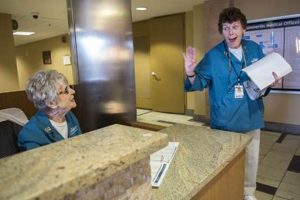
Serving as information desk personnel, such individuals provide guidance and assistance to patients, visitors, and staff. This includes answering inquiries, providing directions, and assisting with registration processes. For example, unpaid personnel may help patients navigate the hospital campus, locate specific departments, or complete necessary paperwork. This reduces congestion at reception areas and improves the overall experience for patients and visitors.
- Appointment Scheduling and Reminders
Volunteers may assist with scheduling patient appointments and providing reminders, reducing the administrative burden on clinical staff. For example, they might contact patients to confirm upcoming appointments, reschedule appointments as needed, or assist with managing waiting lists. This improves patient adherence to treatment plans and optimizes the utilization of medical resources.
The collective impact of these operational support functions, when performed by unpaid personnel, is substantial. By assuming responsibility for non-clinical tasks, these individuals enable medical professionals to focus on their core competencies, ultimately enhancing the quality of patient care and the efficiency of hospital operations. The consistent provision of such support demonstrates the invaluable role of the dedicated volunteers within the healthcare ecosystem.
3. Community engagement facilitator

The connection between unpaid hospital personnel and the role of a community engagement facilitator is intrinsic. The presence of individuals dedicating their time within a medical facility inherently fosters stronger ties between the institution and the surrounding community. These individuals act as liaisons, bridging the gap between the often-impersonal environment of a hospital and the personal lives of the people it serves. The act of contributing time without remuneration demonstrates a vested interest in the well-being of the community, encouraging others to perceive the hospital as an integral part of the local landscape rather than a detached entity. For example, unpaid personnel who organize community health fairs or assist with outreach programs are directly facilitating engagement.
The importance of this facilitator role is amplified by the increasing need for healthcare institutions to be responsive to community needs and build trust. Unpaid workers who interact with patients and their families, offering support and information, help to create a more welcoming and accessible environment. Furthermore, they often possess unique insights into the challenges faced by community members, providing valuable feedback to hospital administrators on how to better serve the population. Consider a scenario where unpaid staff members, through their interactions, identify a significant need for transportation assistance among elderly patients. This information can then be used by the hospital to develop targeted transportation programs, directly addressing a critical community need. Facilitator function can be active through active engagement and passive through the image it projects to the community members.
In conclusion, the participation of dedicated individuals is a critical component of community engagement for hospitals. The act of service not only provides valuable assistance to the facility but also strengthens the bond between the hospital and the community it serves. By fostering a sense of shared responsibility for health and well-being, these personnel contribute to a more connected and supportive local ecosystem. This connection must be nurtured for the benefits of both, the medical institution and the community at large, to be fully realized.
4. Skill development opportunity

Engagement within a healthcare setting offers individuals a significant opportunity for skill development across a broad spectrum. Such opportunities arise as a direct consequence of the diverse tasks and responsibilities assigned to unpaid personnel. The acquisition of new skills enhances personal and professional growth, making such a position an invaluable experience for those seeking career advancement or personal enrichment. For example, assisting in administrative roles can cultivate organizational and communication proficiencies, while direct patient interaction can foster empathy and interpersonal skills.
The development of specific skills holds practical significance for both the individual and the healthcare institution. From the individual’s perspective, skills gained in a medical environment are highly transferable and applicable to a range of professional fields. Furthermore, the experience demonstrates a commitment to service and a willingness to learn, qualities highly valued by employers. For the hospital, having access to personnel with diverse skill sets improves operational efficiency and enhances the quality of care provided. To illustrate, an individual trained in data entry can streamline administrative processes, allowing medical staff to focus on patient care. Similarly, someone proficient in multiple languages can serve as a valuable resource for patients from diverse cultural backgrounds.
In summary, the connection between unpaid service in a hospital and skill development is symbiotic. The opportunity to acquire and refine skills is a significant benefit for the individual, while the resulting expertise enhances the capabilities of the healthcare institution. This mutual benefit underscores the importance of recognizing and supporting such opportunities for both personal and organizational growth, fostering a more skilled and engaged workforce within the healthcare sector and beyond.
5. Healthcare access improvement

The availability of unpaid personnel within a healthcare institution directly correlates with improved accessibility to medical services for the community it serves. When individuals dedicate their time to supporting hospital operations, the institution is better equipped to allocate resources effectively, reducing barriers to care for vulnerable populations. The resultant effect is a more equitable distribution of healthcare services, particularly benefiting those facing financial constraints, geographical limitations, or language barriers. For example, facilities utilizing unpaid personnel for administrative tasks can streamline patient intake processes, reducing wait times and improving the overall experience for individuals seeking medical attention. This operational efficiency, in turn, translates to increased capacity and a greater number of patients served.
The significance of improved accessibility as a component of contributions within a hospital setting is underscored by the increasing demand for healthcare services and the existing disparities in access. Personnel who assist with transportation, translation, or patient navigation play a pivotal role in ensuring that all members of the community can access the care they need. A real-life example is seen in urban hospitals where individuals assist non-English-speaking patients with communication, enabling them to understand medical instructions and make informed decisions about their treatment. Similarly, in rural areas, personnel providing transportation to medical appointments can bridge the gap for patients lacking reliable means of travel, ensuring they receive timely care and prevent medical conditions from escalating. The access, while not directly medical, it gives the opportunity for healthcare access to patients.
In conclusion, recognizing the integral role of such personnel in enhancing healthcare accessibility is crucial for promoting a more just and equitable healthcare system. By alleviating administrative burdens, providing essential support services, and bridging communication gaps, these individuals contribute significantly to ensuring that healthcare is accessible to all, regardless of socioeconomic status or geographical location. Overcoming the challenges related to recruiting, training, and retaining these personnel is paramount to maximizing their impact and creating a healthcare system that truly serves the needs of the entire community.
6. Reduced staff burden

The engagement of individuals in unpaid service directly alleviates the workload of paid medical staff within a healthcare institution. This reduction in burden is not merely quantitative but also qualitative, enabling medical professionals to focus on tasks requiring specialized training and expertise. A multifaceted approach clarifies the specific contributions and implications of this dynamic.
- Administrative Task Support
Unpaid personnel often assume responsibility for various administrative functions, such as managing patient records, scheduling appointments, and handling correspondence. This frees up nurses and other medical staff from these duties, allowing them to devote more time to direct patient care. For example, an individual assisting with insurance verification and pre-authorization processes reduces the administrative strain on billing departments, ensuring smoother financial operations.
- Patient Transportation and Assistance
Assisting with the transportation of patients within the facility and providing support with non-medical tasks, such as meal delivery or wayfinding, lessens the demands on nursing staff. The provision of such services ensures patients receive timely assistance and support, promoting their comfort and well-being. An example includes guiding patients to different departments or assisting with mobility challenges, reducing the risk of falls and improving patient satisfaction.
- Emotional Support and Companionship
Engaging with patients to provide emotional support and companionship can alleviate the burden on medical staff, who may have limited time for such interactions. Offering a listening ear, reading aloud, or simply spending time with patients can significantly reduce anxiety and feelings of isolation. For example, an individual visiting with a patient who has no family nearby provides crucial emotional support that complements medical treatment.
- Equipment and Supply Management
Assisting with the organization, maintenance, and inventory of medical equipment and supplies reduces the workload of hospital staff. This includes tasks such as restocking supplies in patient rooms, ensuring equipment is properly sterilized, and tracking inventory levels. The optimization of resource management ensures that medical professionals have the necessary tools readily available, improving efficiency and patient care.
The collective contribution of dedicated people in these varied roles is central in mitigating the pressures faced by hospital staff. By assuming responsibility for non-clinical functions, they are active contributors to the operational efficiency and quality of patient care within the institution.
Frequently Asked Questions Regarding Hospital Voluntary Service
The following section addresses common inquiries and clarifies prevalent misconceptions surrounding participation in these programs. The information presented aims to provide a comprehensive understanding of the responsibilities, expectations, and benefits associated with dedicating time to a healthcare institution.
Question 1: What is the minimum age requirement to become one?
Age requirements vary by institution. Many hospitals accept individuals aged 16 and older. However, certain departments or roles may necessitate a minimum age of 18 due to the nature of the responsibilities or potential exposure to sensitive situations. Prospective applicants should consult the specific requirements outlined by the hospital’s volunteer services department.
Question 2: Is prior medical experience necessary to volunteer in a hospital?
Prior medical experience is not a prerequisite for most roles. While certain specialized positions may benefit from relevant skills or training, the majority of opportunities focus on providing support in non-clinical areas. Hospitals typically provide comprehensive training to equip unpaid personnel with the necessary knowledge and skills to perform their assigned tasks effectively and safely.
Question 3: What is the typical time commitment required of personnel?
The time commitment varies depending on the institution and the specific role undertaken. Hospitals generally require a minimum number of hours per week or month to ensure consistent and reliable support. This commitment can range from a few hours each week to several hours per day, depending on the needs of the hospital and the availability of the individual. Consistent attendance is highly valued and essential for maintaining operational efficiency.
Question 4: What types of background checks are required?
Hospitals typically conduct thorough background checks on all individuals to ensure patient safety and security. These checks may include criminal history screenings, drug testing, and verification of credentials. The specific requirements vary depending on the institution and the state in which it is located. Compliance with background check protocols is mandatory for all personnel.
Question 5: Are individuals assigned to specific departments or allowed to choose?
The assignment process varies by hospital. Some institutions allow individuals to express their preferences for specific departments or roles, while others assign them based on institutional needs and skill sets. Consideration of preferences is often balanced with the hospital’s operational requirements and the individual’s qualifications. Flexibility and adaptability are beneficial qualities for those seeking these positions.
Question 6: Are there any risks associated with performing duties within a hospital setting?
As with any healthcare environment, there are inherent risks associated with these activities, including exposure to infectious diseases and potential for injury. Hospitals provide training on infection control procedures and safety protocols to mitigate these risks. Adherence to established guidelines and the use of personal protective equipment are essential for minimizing potential hazards.
In conclusion, engagement requires a commitment to service, a willingness to learn, and a dedication to upholding the highest standards of professionalism and patient safety. By understanding the expectations and requirements outlined in this FAQ section, prospective individuals can make informed decisions about their participation and contribute meaningfully to the healthcare environment.
The subsequent section will explore the potential benefits.
Conclusion
The preceding exploration has outlined the multifaceted role of the hospital volunteer within the modern healthcare landscape. From augmenting patient well-being and easing staff burden to fostering community engagement and providing skill development opportunities, the contributions of these unpaid individuals are demonstrably significant. The analysis has illuminated the integral function this person performs in supporting healthcare systems and improving patient outcomes.
Recognition of the hospital volunteer as a vital component of healthcare delivery is crucial. Continued support and strategic utilization of these dedicated individuals will ensure the sustained enhancement of patient care and the strengthening of community ties within the healthcare ecosystem. Their presence remains an essential element in the ongoing mission to provide accessible and compassionate care to all.