Table of Contents

If you have been searching for meaningful, structured, and safe ways for young people to volunteer abroad, you have almost certainly come across Amigos de las Américas, commonly known as AMIGOS. Founded in 1965, this nonprofit has helped tens of thousands of teenagers and young adults immerse themselves in Latin American communities while building real leadership skills. But with so many destinations and program formats available, choosing the right one can feel overwhelming. This guide breaks down the best Amigos de las Americas volunteer programs, what each one offers, who they are designed for, and how to decide which experience fits your goals, budget, and Spanish level.
What Is Amigos de las Américas?
Amigos de las Américas is a Houston-based, nonprofit youth leadership organization that has been running cross-cultural volunteer and immersion programs across Latin America for more than five decades. Unlike many “voluntourism” companies, AMIGOS was built specifically for young volunteers, typically ages 13 to 22, and is grounded in community-driven development. Local partner organizations and host communities help identify projects, so volunteers support initiatives that residents actually want, such as environmental conservation, public health campaigns, education initiatives, and youth empowerment activities.
Programs range from short summer immersions to full gap year and semester experiences, and nearly all include a homestay with a local host family, which is central to the AMIGOS model of cultural immersion and language learning.
Why AMIGOS Stands Out Among Teen Volunteer Abroad Programs
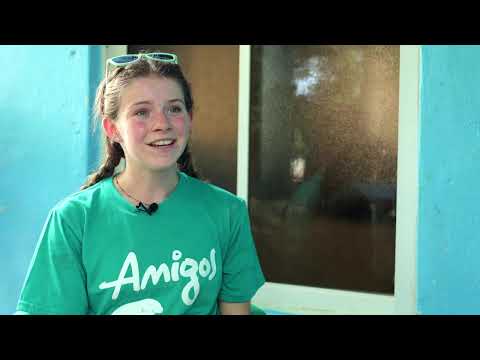
Plenty of organizations send teenagers abroad, but few match AMIGOS in terms of history, safety infrastructure, and developmental impact. Here is what consistently sets it apart:
- Youth leadership focus: Volunteers are treated as project leaders, not tourists, and take ownership of community initiatives.
- Homestay immersion: Living with host families accelerates Spanish language learning and creates genuine cultural connections.
- Community-led projects: Work responds to locally identified needs in areas like conservation, health, and education.
- Strong safety systems: In-country staff, trained project supervisors, established emergency protocols, and decades of operating experience.
- College and career benefits: Alumni frequently cite AMIGOS on college applications, and the program builds skills in adaptability, communication, and cross-cultural teamwork.
- Financial accessibility: Scholarships, fundraising support, and payment plans make participation possible for families across income levels.
The Best Amigos de las Americas Volunteer Programs to Consider
AMIGOS rotates its destinations and program themes from year to year, so always confirm current offerings on the official website. That said, certain destinations and formats have become signature experiences. The comparison table below summarizes the most popular options:
| Program / Destination | Focus Area | Typical Duration | Typical Ages | Spanish Level |
| Costa Rica Summer | Environmental conservation, ecotourism, wildlife protection | 2–6 weeks | 15–18 | Beginner to intermediate |
| Dominican Republic Summer | Community health, youth development, education | 4–6 weeks | 15–18 | Intermediate recommended |
| Ecuador Summer | Environmental stewardship, Andean community projects | 4–6 weeks | 15–18 | Intermediate |
| Panama Summer | Conservation, rural community engagement | 4–6 weeks | 15–18 | Beginner to intermediate |
| Peru Summer | Rural development, youth leadership | 4–6 weeks | 15–18 | Intermediate recommended |
| Gap Semester / Year | Deep immersion, service learning, leadership training | 3–9 months | 17–22 | Intermediate to advanced |
1. Costa Rica: Environmental Conservation and Eco-Volunteering
Costa Rica is one of the most popular AMIGOS destinations, and it is easy to see why. Volunteers partner with environmental organizations and rural communities on projects tied to reforestation, wildlife monitoring, sea turtle protection, and sustainable ecotourism. If you are passionate about climate action, biodiversity, or pursuing environmental studies, this program offers hands-on field experience in one of the world’s most biodiverse countries. Homestays in small towns also make it an excellent choice for students with limited Spanish who want rapid language progress in a famously welcoming culture.
2. Dominican Republic: Community Health and Youth Empowerment
The Dominican Republic program emphasizes public health, education, and youth leadership. Volunteers have historically supported community health initiatives, recreational and sports programming for children, and grassroots youth groups. It is a strong fit for students interested in pre-med tracks, global health, social work, or teaching. Because daily life moves fast and communities are highly social, volunteers with at least conversational Spanish tend to thrive here, though structured orientation and staff support help less experienced speakers build confidence quickly.
3. Ecuador: Andean Communities and Environmental Stewardship
Ecuador packs coast, mountains, and Amazon jungle into one small country, giving volunteers a remarkably varied cultural and ecological experience. AMIGOS has a long history in Ecuador, with projects centered on environmental protection, community development, and youth engagement in Andean and rural communities. This program suits volunteers who want a classic, immersive AMIGOS experience with meaningful service work, dramatic landscapes, and the chance to practice Spanish in communities where English is rarely spoken.
4. Panama: Conservation and Rural Community Engagement
Panama programs typically blend environmental projects, such as conservation and reforestation efforts, with community engagement in rural regions. Volunteers often work alongside local youth leaders and community organizations, which makes this destination ideal for those who want both ecological fieldwork and people-centered service. It is frequently recommended for first-time volunteers who want a balanced introduction to AMIGOS-style immersion without an overwhelming workload.
5. Peru: Rural Development and Cultural Depth
Peru offers volunteers the chance to live in communities shaped by Andean traditions, with projects historically focused on rural development, education support, and youth activities. The cultural depth here is unmatched, from food and festivals to family life, and the program attracts volunteers interested in international development, anthropology, or Latin American studies. Because many host communities are in highland regions, volunteers should be prepared for rustic living conditions and rewarding physical work.
6. Gap Year and Semester Programs for Ages 17–22
For students who want more than a summer, AMIGOS gap and semester programs provide several months of sustained immersion, structured leadership training, and multiple community placements. These programs are popular with students deferring college, taking a post-high school bridge year, or seeking purposeful time between semesters. The extended format allows volunteers to develop advanced Spanish fluency, take on greater project responsibility, and build a compelling narrative for college applications, scholarships, and résumés.
How to Choose the Right AMIGOS Program for You
With several strong options, the “best” program is simply the one that matches your profile. Consider these factors before applying:
- Your Spanish level: Some programs welcome beginners, while others strongly recommend one to two years of Spanish study or conversational fluency.
- Your interests: Choose environmental conservation in Costa Rica or Panama, public health and education in the Dominican Republic, or cultural and rural development in Ecuador and Peru.
- Your timeline: Short programs (2–3 weeks) suit first-timers; 4–6 week programs offer deeper immersion; gap programs deliver maximum impact.
- Your comfort zone: Rural homestays often mean limited internet, bucket showers, and slower pacing. Honest self-assessment prevents culture shock.
- Program dates: Summer sessions typically run June through August and fill early, so plan around school calendars.
Costs, Scholarships, and Fundraising for AMIGOS Programs
Let’s talk numbers honestly. AMIGOS summer programs typically cost several thousand dollars, often in the range of $4,000 to $6,000 depending on destination, duration, and inclusions such as flights, orientation, food, lodging, and staff support. Gap and semester programs cost more due to their length. While this is a significant investment, it generally covers far more than budget volunteer companies provide, including comprehensive training, 24/7 in-country supervision, and established community partnerships.
Importantly, AMIGOS actively works to reduce financial barriers:
- Need-based scholarships awarded through the organization’s financial aid process.
- Fundraising tools and coaching that help volunteers raise a meaningful portion of their program fee.
- Payment plans that spread costs across several months.
- Chapter-based programs in certain U.S. cities that offer local training cohorts and, historically, reduced or subsidized pricing.
Apply for financial aid early, as scholarship funds are limited and awarded on rolling timelines.
What the AMIGOS Volunteer Experience Is Really Like
Expect structure, not spontaneity. Most programs begin with a multi-day orientation covering safety, cultural norms, Spanish practice, and project planning. Volunteers then travel to their assigned communities, usually in pairs or small groups, and move in with host families. Days involve a mix of project work, community activities, time with local youth, and family life, from cooking meals to attending town events.
Living conditions vary by country but are often simple: shared rooms, basic amenities, and limited connectivity. That simplicity is the point. Volunteers consistently describe the homestay as the most transformative part of the program, the element that turns a service trip into genuine cultural exchange. Throughout the experience, project supervisors and in-country staff conduct regular check-ins, and every volunteer carries a clear emergency protocol. This layered support system is a major reason parents consistently rate AMIGOS among the safest teen volunteer abroad options.
How to Apply: A Step-by-Step Overview
The application process is straightforward but benefits from early planning. Here is the typical path:
- Browse current programs on the official AMIGOS website and compare destinations, dates, ages, and Spanish requirements.
- Submit an online application, which usually includes personal statements and references.
- Complete an interview or admission conversation to assess readiness and program fit.
- Secure your spot with a deposit and enroll in a payment or fundraising plan.
- Attend pre-departure training, covering health, safety, cultural preparation, and project skills.
- Travel, serve, and immerse in your host community with full staff support.
For summer programs, applying in the fall or early winter gives you the widest choice of destinations and the best scholarship odds. Popular programs and limited aid funds both disappear quickly.
Final Thoughts: Are AMIGOS Programs Worth It?
For young people who want a genuine, ethical, and well-supported introduction to international volunteering, Amigos de las Américas remains one of the strongest options available. The combination of community-led projects, homestay immersion, rigorous safety standards, and a proven youth leadership model explains why the organization has thrived since 1965. Whether you choose sea turtle conservation in Costa Rica, health education in the Dominican Republic, or a full gap semester across multiple countries, you will return with sharper Spanish, greater independence, and a much clearer sense of who you are. Verify current destinations and pricing on the official site, apply early, and commit fully to the immersion, because that is where the real transformation happens.
Frequently Asked Questions
What age do you have to be to volunteer with Amigos de las Américas?
Most AMIGOS programs serve volunteers roughly between ages 13 and 22. Classic summer programs typically target ages 15 to 18, while gap year and semester programs are designed for ages 17 to 22. Shorter introductory options may be open to younger teens. Always check the specific age requirements listed for each program year.
Do you need to speak Spanish to join an AMIGOS volunteer program?
It depends on the program. Some destinations welcome beginners and provide structured language support, while others recommend at least one to two years of Spanish or conversational proficiency because host communities speak little English. Reviewing the language requirements for each destination before applying ensures a better experience.
How much do AMIGOS volunteer programs cost, and is financial aid available?
Summer programs generally range from roughly $4,000 to $6,000 depending on destination and length, while gap and semester programs cost more. Fees typically cover training, housing, meals, in-country staff, and supervision. AMIGOS offers need-based scholarships, structured fundraising support, and payment plans, so motivated applicants can significantly reduce out-of-pocket costs.
Are Amigos de las Américas programs safe for teenagers?
Yes. Safety is a core organizational priority, with trained project supervisors, established in-country partnerships, medical and emergency protocols, and regular volunteer check-ins. AMIGOS has operated in Latin America for nearly 60 years, and this long institutional experience, combined with small community placements and homestay vetting, gives many parents strong peace of mind.
Can AMIGOS volunteering help with college applications?
Absolutely. Admissions readers value sustained, community-driven international service combined with measurable leadership, and AMIGOS provides both. Alumni commonly reference the program in personal essays, and the skills gained, including cross-cultural communication, resilience, and project management, translate directly into compelling college and scholarship applications.
How far in advance should you apply for AMIGOS summer programs?
Ideally, begin researching in late summer or fall and submit your application between October and January. Applying early maximizes your choice of destination, gives you more time to fundraise, and improves your chances of receiving scholarship support before funds run out.