


Table of Contents

If you have recently typed “backpack food for kids volunteer near me” into a search engine, you are probably looking for a hands-on, meaningful way to fight childhood hunger in your own community. You are not alone. Across the United States, roughly one in five children lives in a household that struggles with food insecurity, and for many of those kids, school meals are the most reliable nutrition they receive all week. When Friday afternoon arrives, the worry begins. Weekend backpack food programs exist to close that gap, and they run almost entirely on local volunteers like you. This guide walks you through exactly what these programs do, how to find one in your area, what volunteering actually looks like, and how to make the biggest possible impact from your very first shift.
What Is a Weekend Backpack Food Program for Kids?
A weekend backpack food program — sometimes called a food backpack program, blessing backpack program, or school weekend feeding program — provides shelf-stable, child-friendly meals and snacks to students who might otherwise go hungry over weekends and school breaks. The concept is simple but powerful: volunteers pack bags or backpacks with easy-to-prepare items like mac and cheese cups, ravioli, granola bars, oatmeal packets, shelf-stable milk, fruit cups, and peanut butter crackers. School staff then discreetly place the packed food into a child’s locker, cubby, or regular backpack so no child is singled out.
National organizations such as Blessings in a Backpack, Feeding America food banks, and No Kid Hungry partner schools support hundreds of these programs, but the majority are hyper-local operations run by school districts, churches, civic clubs like Rotary and Lions, and neighborhood nonprofits. Because each program typically serves anywhere from 20 to several hundred children every single week, dependable volunteers are the single most important resource a program can have.
Why Searching “Backpack Food for Kids Volunteer Near Me” Matters
Unlike many volunteer opportunities, backpack programs cannot outsource their work to distant warehouses. The food must be packed locally and delivered to specific schools before the weekend. That means every program depends on neighbors within driving distance of a school, church, or distribution center. When you volunteer close to home, you create a consistent, weekly safety net for children in your own school district — kids who ride the same buses and shop at the same grocery stores your family does.
Local involvement also builds trust. School counselors and social workers can identify children in need faster when a known community group is standing behind them. In short, the phrase “near me” is not just a search filter — it is the entire operating model of the movement.
How to Find Backpack Food Volunteer Opportunities Near You
Finding a program takes less time than most people expect. Use these proven methods to locate a weekend food program actively recruiting volunteers in your area:
- Search Google and Google Maps using variations like “backpack food program volunteer your city,” “weekend food backpack program near me,” and “blessings in a backpack county name.”
- Contact your local food bank. Most regional food banks either operate a backpack program directly or maintain lists of partner programs seeking help.
- Call or email school district offices. Ask for the family services or student support department — they usually know which campuses run weekend food programs.
- Check VolunteerMatch, JustServe, and Idealist. These platforms let you filter by ZIP code and cause area, including hunger relief and child nutrition.
- Ask churches and civic clubs. Faith communities and service organizations frequently sponsor backpack programs and openly welcome outside volunteers.
- Search Facebook for local groups. Community pages often post urgent calls for packers, drivers, and food drive organizers.
Questions to Ask Before You Commit
Once you find a program, ask a few practical questions so your expectations match the reality of the role:
- What is the packing schedule, and how long does a typical shift last?
- Is there a minimum age for volunteers, and can children participate with a parent?
- Where does the packing take place — a school, church, warehouse, or garage?
- Do volunteers also deliver the bags to schools, or is that a separate team?
- Is there a background check or orientation required for school-based roles?
Common Volunteer Roles in a Kids’ Backpack Food Program
Volunteering is not one-size-fits-all. Most programs divide the work into specialized roles so the weekly pipeline runs smoothly from donation to delivery. Here is a comparison of the most common positions:
| Volunteer Role | Main Tasks | Time Commitment | Best For |
| Packing Line Volunteer | Assembling bags along an assembly line, checking dates, sealing bags | 1–2 hours weekly | Families, first-timers, groups |
| Food Sorter / Inventory Helper | Organizing donated food, checking expiration dates, restocking shelves | 1–3 hours weekly or biweekly | Detail-oriented adults, teens |
| Delivery Driver | Transporting packed bags to partner schools | 1 hour weekly, daytime | Retirees, remote workers |
| Food Drive / Fundraising Organizer | Planning collection events, soliciting sponsors, managing donations | Flexible, project-based | Professionals, community leaders |
| Program Coordinator | Managing volunteers, school relationships, and ordering supplies | 3–5 hours weekly | Experienced organizers |
If you are brand new, the packing line volunteer role is the ideal entry point. It requires no special skills, delivers immediate visible results, and is where most programs need the most hands.
What to Expect on Your First Volunteer Day
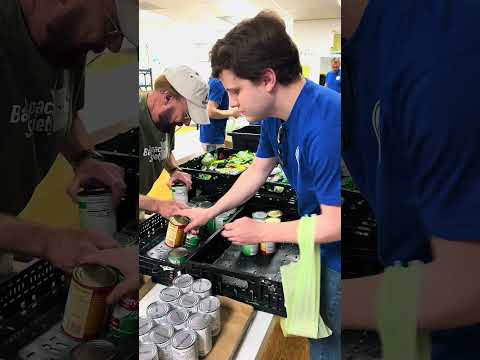
Your first shift will likely follow a predictable rhythm. Volunteers arrive at the packing site, wash hands, and receive a short briefing on the week’s menu and any allergen concerns. Then the assembly line forms: one station fills bags with a main entrée, another adds breakfast items, another drops in snacks and shelf-stable milk, and a final station seals and stacks the completed bags. A typical session might pack 100 to 300 bags in under two hours when the line is well staffed.
Expect a warm, fast-paced, surprisingly fun atmosphere. Many regulars describe packing shifts as a workout for both body and heart. Wear closed-toe shoes, and do not be surprised if you leave with sore arms and a full one.
Who Can Volunteer — Kids, Families, and Groups
One of the best features of backpack food programs is their inclusiveness:
- Children and teens: Many programs welcome kids as young as 6 or 8 with a parent, making this one of the best family volunteering options. Teens can often earn community service hours for school or National Honor Society requirements.
- Corporate and civic groups: Companies, scout troops, sororities, and sports teams frequently sponsor a “packing day” as a team-building event.
- Seniors and retirees: Weekday daytime schedules suit volunteers with flexible mornings, and delivery roles offer light, meaningful work.
- Individuals with limited mobility: Seated stations, inventory work, and administrative support keep everyone involved.
Always confirm age policies with the specific program, since school-based delivery roles sometimes require background checks for adults.
What If There Is No Backpack Program in Your Area? Start One
If your search for “backpack food for kids volunteer near me” comes up empty, you may have discovered a genuine community need. Starting a program is very achievable:
- Partner with a school. Counselors and social workers identify which students need support and manage discreet distribution.
- Secure food sourcing. Connect with your regional food bank, apply for wholesale purchasing programs, or launch a recurring food drive.
- Establish a packing and storage site. A church room, community center, or even a large garage works for most start-up programs.
- Recruit a core volunteer team. Aim for at least 8–12 people so no single family carries the weekly load alone.
- Handle logistics and funding. Budget roughly $3–$8 per child per weekend, and set up a simple donation channel through a fiscal sponsor or nonprofit partner.
National organizations like Blessings in a Backpack offer turnkey starter kits that dramatically shorten the learning curve.
Expert Tips to Maximize Your Impact as a Backpack Volunteer
Experienced program leaders consistently share these insider recommendations:
- Commit to a recurring shift. Consistency matters more than volume; programs can plan around reliable weekly volunteers.
- Learn the “kid-friendly” food rules. Items must be pop-top or no-cook, lightweight, and non-perishable — think pull-tab ravioli, not canned soup requiring a can opener.
- Respect confidentiality. Never discuss which students receive bags; discretion protects children’s dignity.
- Bring your skills beyond packing. Graphic designers can create flyers, accountants can help with budgets, and social media users can amplify food drives.
- Think seasonally. Demand spikes before winter and spring breaks — volunteer extra shifts and donate holiday-appropriate items when possible.
Frequently Asked Questions
How old do you have to be to volunteer at a backpack food program for kids?
Most programs allow children ages 6–12 to volunteer alongside a parent or guardian, while teens 13 and up can often pack independently. Age requirements vary by organization, so always check with the local program. School-based delivery roles typically require adult volunteers to complete a background check.

What do volunteers actually pack in weekend food backpacks for children?
Volunteers pack shelf-stable, child-friendly foods that require no cooking skills: mac and cheese cups, ravioli pull-tops, instant oatmeal, granola bars, fruit cups, applesauce, peanut butter crackers, and shelf-stable milk. The goal is 6–12 easy meals and snacks covering weekends and short breaks, all light enough for a child to carry home discreetly.

How do I find weekend backpack food programs that need volunteers in my area?
Start with a local food bank, your school district’s family services office, and volunteer platforms like VolunteerMatch and JustServe. Searching “blessings in a backpack” plus your city name, checking community Facebook groups, and calling nearby churches or Rotary clubs will usually surface an active program within one or two phone calls.
Can I volunteer with my kids at a children’s backpack food program?
Yes — family volunteering is one of the greatest strengths of backpack programs. Packing lines are safe, fast, and educational, teaching children empathy while they work side by side with you. Confirm minimum age rules first, and consider making it a recurring monthly family tradition that kids look forward to.
Do backpack food programs need ongoing volunteers or just one-time helpers?
Both, but recurring volunteers are far more valuable. Because packing happens every week during the school year, programs build their schedules around dependable regulars. One-time group volunteers are still welcome for large pack events, seasonal food drives, and holiday break prep, so there is a fit for every availability level.
How much time does volunteering at a kids’ food backpack program take each week?
A typical packing shift lasts 60–90 minutes, and many volunteers give just one to two hours weekly. Add-on roles like delivery driving or inventory sorting may require another hour. Compared with the impact — a child eating reliably every weekend — the time investment is remarkably small.
Final Thoughts: Turn a Simple Search Into Real Change
That search for “backpack food for kids volunteer near me” is more than a query — it is the first step toward becoming part of a quiet, powerful safety net for children in your neighborhood. Weekend backpack programs prove that ending childhood hunger does not require a national strategy or a massive budget; it requires neighbors, a folding table, a few hundred grocery bags, and two hours a week. Find a local program, sign up for your first packing shift, bring a friend, and keep showing up. The child who opens that backpack on Friday night will never know your name, but they will feel exactly what your search set in motion: a community that refuses to let kids go hungry.