


Table of Contents
Every Friday afternoon, thousands of children across the country slip a discreet bag of food into their backpack before heading home for the weekend. That bag, often stuffed with shelf-stable meals, granola bars, and single-serve cereals, is the lifeline between school lunches for kids who rely on free or reduced-price meals during the week. Behind every one of those bags stands a small army of volunteers. If you have ever wondered how backpack food for kids nonprofit volunteer roles actually work — what the jobs involve, how much time they take, and where a beginner fits in — this guide walks you through everything, from your first packing shift to a leadership seat on the board.
What Are Backpack Food Programs and Why Do They Exist?
Backpack food programs, sometimes called weekend feeding programs or weekend backpack ministries, are school-based hunger relief initiatives that send shelf-stable food home with students who face food insecurity when school cafeterias close. Organizations such as Blessings in a Backpack, regional food bank backpack programs, and hundreds of independent community nonprofits pioneered this model after educators noticed that children returning on Monday morning were visibly hungry, distracted, and struggling to learn.
The concept is simple, but the operation is not. A single program serving 100 children needs roughly 4,000 food items each month, reliable purchasing power, storage space, packed bags every week, and a discreet distribution system inside schools. That is precisely why volunteers are the engine of these nonprofits — most programs run on lean budgets where paid staff, if any, are limited to one coordinator.
Why Volunteer Roles Are the Backbone of Weekend Feeding Programs
Unlike larger food banks with warehouse staff and delivery fleets, backpack nonprofits depend on community members to function at all. Volunteers keep overhead low, which means more donated dollars convert directly into meals. They also serve as the human connection between schools, churches, civic groups, and families. When a volunteer coordinator recruits a local Rotary club to sponsor a school, or when a retired teacher spots a child who needs enrollment, the program grows in ways money alone cannot accomplish.
Understanding the distinct nonprofit volunteer positions available helps you match your skills, schedule, and comfort level with the right role — and helps programs place people where they deliver the most impact.
The Core Volunteer Roles in a Backpack Food Nonprofit
Food Packing Line Volunteers
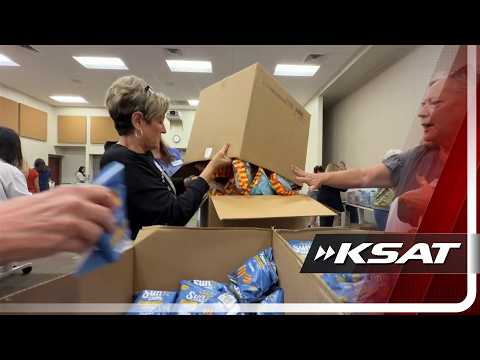
This is the classic entry point and the role most people picture. Packing volunteers assemble weekend bags on an assembly line, dropping items like protein shelf-stable milk, ravioli cups, fruit cups, and snacks into grocery-sized sacks. Shifts typically last 60 to 90 minutes, and tasks require no special skills — just reliability and the ability to stand for the duration. Many families volunteer together, and it is one of the best family-friendly volunteer opportunities available since children as young as five can participate alongside parents.
Warehouse and Inventory Volunteers
Before food ever reaches a packing line, someone must receive deliveries, check expiration dates, count cases, rotate stock, and break down bulk quantities into packing stations. Inventory volunteers keep meticulous records so the coordinator knows exactly what to order. People who enjoy organization, light lifting (usually under 30 pounds), and spreadsheets thrive here. This role is critical for food safety compliance and for stretching every grant dollar.
School Liaisons and Distribution Coordinators
These volunteers are the program’s presence inside the school. A liaison coordinates with counselors and social workers to identify eligible students, manages consent forms, ensures bags are distributed discreetly — often slipped into lockers or backpacks while children are in class — and reports weekly counts back to the nonprofit. Because this role involves contact with student information, it usually requires background screening and training on confidentiality and dignity-centered practices.
Drivers and Logistics Volunteers
Someone has to move packed totes from the church basement or warehouse to half a dozen schools before dismissal on Friday. Drivers use their own vehicles or a program van, follow a set route, and often build warm relationships with school front-office staff along the way. A valid license, insurance, and a consistent weekly window of two to three hours are the main requirements.
Fundraising and Grant Support Volunteers
Food costs money — typically $2.50 to $6 per child per week — so fundraising volunteers sustain the entire operation. Responsibilities might include organizing food drives, coordinating restaurant nights and 5K runs, writing thank-you notes to donors, researching grant opportunities, or assisting with grant narratives. Retirees with corporate, sales, or nonprofit backgrounds are especially valuable here, but motivated newcomers can learn quickly.
Communications and Social Media Volunteers

Programs need visibility to recruit volunteers and donors. Communications volunteers manage Facebook pages and Instagram accounts, design flyers for food drives, photograph (consented) packing events, and send newsletters. It is an excellent remote-friendly role for people who cannot commit to physical shifts but want to contribute expertise.
Volunteer Coordinators and Board Members

At the advanced level, a volunteer coordinator schedules shifts, trains newcomers, tracks hours for grant reporting, and troubleshoots no-shows. Board members — often drawn from long-serving volunteers — handle governance, strategic partnerships, financial oversight, and community relationships. These roles demand several hours per week and carry real fiduciary responsibility, but they also offer the deepest influence over a program’s reach and sustainability.
Comparing Backpack Program Volunteer Roles at a Glance
| Role | Time Commitment | Skill Level | Typical Age Minimum | Background Check |
| Packing line volunteer | 1–2 hours weekly or monthly | Beginner | 5 with a parent | Usually not required |
| Warehouse/inventory | 2–4 hours weekly | Beginner to intermediate | 14–16 | Sometimes |
| Driver/logistics | 2–3 hours weekly | Intermediate | 18+ (licensed) | Yes |
| School liaison | 2–3 hours weekly | Intermediate to advanced | 18+ | Yes, mandatory |
| Fundraising volunteer | Flexible, project-based | Intermediate | 16+ typically | Occasionally |
| Communications volunteer | 1–3 hours weekly, remote | Intermediate | 16+ | Rarely |
| Coordinator/board member | 5–10 hours weekly | Advanced | 21+ | Yes, plus references |
How to Get Started as a Backpack Program Volunteer
Getting involved is easier than most people expect. Follow these steps to move from interested bystander to active volunteer:
- Search locally first. Look for phrases like “weekend backpack program near me,” check your regional food bank’s website, or contact school district family services offices — most districts know exactly which schools have programs.
- Attend an orientation or tour. Reputable programs walk new volunteers through the mission, food safety basics, and confidentiality expectations before the first shift.
- Complete any required screening. If your role touches students or student data, expect a background check, possibly safeguarding training, and a signed confidentiality agreement.
- Commit to a realistic schedule. Consistency matters more than volume. A volunteer who shows up reliably every second Tuesday is more valuable than an occasional large-group visitor.
- Track your hours. Volunteer hour totals strengthen grant applications and can qualify students for service awards like the President’s Volunteer Service Award.
- Ask about growth. Tell the coordinator your skills — logistics, writing, design, accounting — so they can route you toward higher-impact work over time.
Safety, Dignity, and Child Protection Considerations
Because these programs serve minors, trustworthy operations take protection seriously. Expect policies such as never discussing a child’s participation publicly, distributing bags discreetly, storing records securely, and reporting concerns about a student’s welfare to school staff. Food safety also matters: volunteers should understand allergen awareness, date-checking procedures, and clean-handling rules for packing stations. A program that trains you on these points is a program worth your time.
Expert Tips for Making a Bigger Impact
After observing dozens of successful weekend feeding programs, a few patterns separate thriving volunteer teams from struggling ones:
- Adopt a school, not just a shift. Groups that sponsor one school’s entire roster — packing, driving, and funding — create stability that fragments easily in loosely organized programs.
- Pair every large group visit with a recurring individual. Corporate and church group packing events are fantastic, but a consistent core volunteer prevents gaps between visits.
- Think in units, not cans. Donors who underwrite a child’s full semester ($100–$250 depending on program cost) simplify budgeting more than scattered item donations.
- Respect the quiet. The dignity of anonymity is central to the model. Never photograph faces, name students, or post enrollment details, even to celebrate success.
- Plan for summer. Hunger does not take a break when school closes; volunteers who help launch summer meal bridges or expanded summer bags multiply their impact.
From Volunteer to Leader: Growing Within the Movement
Many program directors, founders, and food security advocates began by filling granola bars into sacks one Friday. The pathway typically moves from packer, to shift lead, to coordinator, to board service. Along the way, volunteers build grant-writing experience, nonprofit finance literacy, and community networks that benefit entire regions. If your long-term goal is a career in nonprofit management, social work, or public health nutrition, backpack programs offer genuine hands-on credentials and mentorship. National organizations also offer affiliate structures, meaning a dedicated local leader can launch a new program in an unserved school district with established playbooks, food sourcing contracts, and branding support.
Final Thoughts on Serving Through Backpack Food Programs
Weekend backpack food programs prove that a modest, well-organized volunteer effort can quietly dismantle one of childhood’s most invisible problems. Whether you can spare ninety minutes a month to pack bags or ten hours a week to coordinate logistics, fundraise, or lead, there is a seat for you — and every seat matters. The need is real, the model is proven, and the barrier to entry is low. Reach out to a local school, food bank, or national affiliate this week; the Monday morning smiles you help create will explain the rest better than any article can.
Frequently Asked Questions
What do volunteers do in a weekend backpack food program for kids?
Volunteers perform a range of tasks: packing food bags on assembly lines, managing warehouse inventory, driving totes to schools, coordinating distribution with school counselors, running food drives and fundraisers, handling social media, and scheduling other volunteers. Most newcomers start on the packing line, where a single 90-minute shift can prepare 200 to 400 bags for local students.
How old do you have to be to volunteer for a backpack food nonprofit?
Age requirements vary by role. Many programs welcome children as young as five on packing lines when accompanied by an adult, making it a popular family service activity. Driving, school liaison, and board roles typically require volunteers to be 18 or older, and positions with student contact always require background screening regardless of age.
How much does it cost to feed one child through a weekend backpack program?
Most programs spend between $2.50 and $6 per child per week, translating to roughly $100 to $250 per child for a full school year, depending on menu items and purchasing partnerships. This is why volunteer labor is so essential — eliminating paid labor costs keeps per-child expenses low and allows donations to go further.
Do backpack program volunteers need background checks?
It depends on the role. Packing and warehouse volunteers generally do not need screening because they have no contact with students or student records. However, school liaisons, drivers who enter schools, coordinators, and board members almost always complete background checks, child protection training, and confidentiality agreements as a condition of service.
Can I volunteer for a backpack food program if I only have limited free time?
Absolutely. Many programs offer flexible options such as once-a-month packing shifts, remote communications work, one-time event support for food drives, or at-home tasks like writing donor thank-you notes. Be honest with the volunteer coordinator about your availability — a reliable two hours per month is far more useful than an unpredictable larger commitment.
How do I find a children’s backpack feeding program that needs volunteers near me?
Start with three searches: your regional food bank’s program directory, the national affiliate locators for organizations like Blessings in a Backpack, and your school district’s website or family services office. Local churches, United Way chapters, and civic clubs also frequently sponsor weekend feeding programs and can connect you with a coordinator within a few days.