Table of Contents

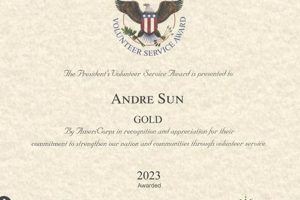
This national honor recognizes individuals and groups who have demonstrated a sustained commitment to volunteer service. Eligibility is determined by the number of volunteer hours completed within a 12-month period or over the course of a lifetime. Recipients receive a personalized certificate, a medallion, and a letter from the President of the United States, acknowledging their significant contributions to their communities and the nation.
The initiative serves as a powerful tool for encouraging civic engagement and recognizing the vital role volunteers play in addressing societal challenges. It fosters a culture of service and highlights the positive impact individuals can make through dedicated volunteerism. The programs history reflects a long-standing commitment to celebrating and supporting the spirit of volunteerism across the country, motivating others to contribute their time and talents to causes they believe in.
The sections that follow will delve into the specific eligibility requirements, award categories, nomination process, and the various organizations that partner with the program to amplify its reach and impact.
Guidance on Obtaining Recognition for Volunteer Contributions
The following guidelines provide insights into effectively pursuing official acknowledgement for dedication to volunteerism.
Tip 1: Document All Volunteer Hours. Maintain meticulous records of all volunteer activities, including dates, times, organizations served, and specific tasks performed. Accurate documentation is essential for meeting eligibility requirements.
Tip 2: Volunteer Through Participating Organizations. Engage with non-profits, charities, or community organizations that are officially recognized as certifying organizations. Volunteering through these entities streamlines the verification process.
Tip 3: Understand Eligibility Requirements. Familiarize oneself with the specific age-based categories and corresponding hour requirements. Ensure the volunteer activities align with the specified guidelines for the desired award level.
Tip 4: Track Volunteer Activities Throughout the Year. Consistently record hours throughout the eligibility period, rather than attempting to reconstruct records at the end of the year. This proactive approach ensures accuracy and completeness.
Tip 5: Submit Nominations Promptly. Adhere to the nomination deadlines established by the certifying organization. Late submissions may not be considered for the current award cycle.
Tip 6: Seek Recognition for Group Efforts. If volunteering as part of a team, explore opportunities for the entire group to receive recognition. Document the contributions of each individual member accurately.
Tip 7: Highlight the Impact of Volunteer Work. When submitting a nomination, emphasize the tangible results and positive outcomes of the volunteer efforts. Illustrate how the service contributed to the organization’s mission or the community’s well-being.
These guidelines aim to support individuals and groups in successfully navigating the recognition process, ensuring their dedication to volunteerism is appropriately acknowledged.
The subsequent sections will provide further details on the nomination process, award presentation, and the long-term benefits of engaging in sustained volunteer service.
1. Eligibility Requirements

The attainment of the Presidential recognition for volunteerism is governed by specific eligibility requirements, which delineate the criteria individuals must meet to qualify for consideration. These criteria serve to standardize the selection process and ensure that recognition is bestowed upon those demonstrating a verifiable commitment to community service.
- Age Categories
Eligibility is stratified into distinct age groups, each with corresponding hour requirements. These categories typically include children (ages 5-10), teens (ages 11-15), young adults (ages 16-25), adults (ages 26+), and families/groups. The segmentation ensures that expectations are appropriately aligned with the capacity and opportunities available to individuals at different stages of life. For example, a child might need fewer hours than an adult to achieve the same level of recognition.
- Minimum Hour Thresholds
Each age category has predefined minimum hour thresholds that must be met within a 12-month period to qualify for the Bronze, Silver, or Gold awards. Lifetime Achievement awards also exist for those who have accumulated a significant number of volunteer hours over their lifetime. Meeting these thresholds necessitates consistent and sustained engagement in volunteer activities. The specified hour requirements represent a demonstrable investment of time and effort towards community betterment.
- Qualifying Service
Eligible service must be unpaid and benefit others. Activities conducted for academic credit, court-ordered community service, or religious instruction typically do not qualify. The service must be performed through a certifying organization, which verifies and validates the volunteer hours. The qualifying service criterion ensures that recognition is reserved for altruistic endeavors that directly contribute to the well-being of the community.
- Certifying Organizations
Volunteer hours must be verified by an approved certifying organization, which can include registered non-profits, schools, faith-based organizations, and other community groups. These organizations act as intermediaries, tracking volunteer hours and submitting nominations on behalf of eligible individuals. The role of certifying organizations is crucial in maintaining the integrity of the awards process by providing verifiable documentation of volunteer activities.
These facets of eligibility requirements are fundamental to the recognition program, ensuring fairness and transparency in the selection process. Meeting these requirements signifies a genuine commitment to volunteer service and underscores the value placed on civic engagement within the community and the nation.
2. Volunteer Hour Thresholds

Volunteer hour thresholds represent a foundational component of the eligibility criteria for the President’s Volunteer Service Award. The award structure directly links specific levels of recognition to the cumulative number of volunteer hours completed within a designated period. Successfully meeting a threshold triggers eligibility for an award, establishing a clear cause-and-effect relationship. Without defined hour thresholds, the program would lack objective benchmarks for evaluating and recognizing volunteer contributions, potentially leading to subjective or inconsistent recognition practices. For example, to receive a Bronze award within the adult age category, an individual must complete a minimum of 100 volunteer hours within a 12-month period. This requirement ensures a quantifiable level of commitment before recognition is granted.
The establishment of these thresholds serves multiple practical purposes. First, they provide a clear and achievable goal for volunteers, encouraging sustained engagement and commitment. Second, they facilitate the equitable distribution of awards based on quantifiable contributions. Third, they assist certifying organizations in accurately assessing eligibility and submitting nominations. For instance, a high school student aiming for a Gold award knows the specific number of hours required, allowing them to plan their volunteer activities accordingly. Understanding the thresholds also enables organizations to effectively promote the award and motivate volunteers to participate.
In summary, volunteer hour thresholds are not merely arbitrary numbers but rather essential elements in the design and implementation of the President’s Volunteer Service Award. They provide a standardized and objective framework for recognizing volunteer contributions, incentivizing sustained engagement, and promoting a culture of service. The effectiveness of the program hinges on the clear and consistent application of these thresholds, ensuring that recognition is both meaningful and equitable.
3. Certifying Organizations

Certifying Organizations are integral intermediaries in the recognition process for the President’s Volunteer Service Award. Their role is paramount in ensuring the integrity and credibility of the award by verifying volunteer service hours and submitting nominations on behalf of eligible individuals.
- Role in Verification
Certifying Organizations serve as the primary point of contact for tracking and validating volunteer hours. They maintain records, confirm service activities, and ensure that the claimed hours align with the program’s eligibility requirements. Without their validation, volunteer hours cannot be officially recognized towards the award. For instance, a local chapter of a national non-profit might track the hours volunteered by its members and then certify those hours for award consideration.
- Nomination Submission
Certifying Organizations are responsible for submitting nominations to the President’s Volunteer Service Award program. They gather the necessary documentation, complete the nomination forms, and ensure that all eligibility criteria are met before submitting the application. This process alleviates the administrative burden on individual volunteers and streamlines the award process. A school, for example, might nominate several students who have demonstrated exceptional volunteer service throughout the academic year.
- Organizational Eligibility
To serve as a Certifying Organization, an entity must meet specific criteria established by the program. This often includes being a registered non-profit, a government agency, or another type of community-based organization. This requirement ensures that Certifying Organizations operate with a degree of accountability and transparency. This verification process helps to assure that the individuals receiving the awards have genuinely dedicated their time and efforts to meaningful service.
- Impact on Award Integrity
The involvement of Certifying Organizations significantly enhances the integrity of the award process. By requiring independent verification of volunteer hours, the program minimizes the potential for fraudulent or inaccurate claims. This rigorous process helps to maintain the value and prestige associated with the President’s Volunteer Service Award. The award then accurately represents the impactful volunteer work done by each recipient.
In essence, Certifying Organizations are essential partners in the President’s Volunteer Service Award program. They provide the necessary infrastructure for verifying volunteer service, submitting nominations, and maintaining the integrity of the award. Their participation ensures that recognition is given to those who have truly demonstrated a commitment to serving their communities.
4. Award Nomination Process

The award nomination process is the critical mechanism by which individuals are recognized for their volunteer contributions through the national service award program. It constitutes the formal channel through which a volunteer’s activities are documented, verified, and presented for consideration. The process hinges on the thorough documentation of volunteer hours and the endorsement of a certifying organization. Absent a properly executed nomination, an individual’s volunteer service, however extensive, cannot be officially acknowledged under the auspices of this award. For instance, an individual dedicating hundreds of hours to a local homeless shelter each year would only be eligible for the award if that shelter is a certified organization and submits a nomination on their behalf.
The significance of the nomination process extends beyond simple recognition. It provides an opportunity for certifying organizations to highlight the impact of volunteer work on the community. Detailed nominations can showcase the specific contributions of volunteers, quantify the benefits of their service, and provide concrete examples of how their efforts have made a difference. This narrative element adds depth to the award, transforming it from a mere tally of hours into a celebration of meaningful impact. Furthermore, the process encourages organizations to develop structured volunteer programs that facilitate the accurate tracking and reporting of volunteer hours, leading to more effective and impactful community service initiatives. Consider a youth mentoring program; by meticulously documenting the hours mentors spend with their mentees and quantifying the positive outcomes (e.g., improved academic performance, reduced truancy), the organization can strengthen its nominations and demonstrate the value of its volunteer efforts.
In summary, the award nomination process is not merely an administrative formality but a vital component of the national service recognition program. It serves as the gateway to official acknowledgement, enables the quantification and qualification of volunteer impact, and encourages the development of well-structured and impactful volunteer programs. Challenges in the nomination process, such as incomplete documentation or lack of awareness among certifying organizations, can hinder the recognition of deserving volunteers. Addressing these challenges and streamlining the process is crucial to ensuring that the program effectively celebrates and encourages sustained commitment to community service.
5. Presidential Recognition

The Presidential Recognition aspect of the President’s Volunteer Service Award constitutes the capstone of the entire initiative. This acknowledgement, symbolized by a personalized certificate, a medallion, and a formal letter, directly from the President of the United States, elevates the award beyond a simple commendation for hours served. The prestige associated with presidential endorsement inherently validates the recipient’s commitment to volunteerism. It signifies that their service has not only met specific quantitative criteria but has also been deemed worthy of national attention and appreciation. Without this element of presidential recognition, the award would lack its distinctive gravitas and its capacity to inspire widespread civic engagement. A teacher, for example, who volunteers extensively in after-school programs and receives this acknowledgement gains a powerful symbol of their dedication, which can further motivate both themselves and their students to engage in community service.
The practical significance of understanding this connection is multifaceted. For volunteers, it highlights the ultimate objective of their service efforts, providing a tangible and prestigious outcome. For certifying organizations, it underscores the importance of diligently documenting and nominating deserving individuals. It also serves as a public relations tool, enhancing the organization’s visibility and attracting further volunteer participation. Consider a local food bank that emphasizes the possibility of presidential recognition when recruiting volunteers. This may attract a higher caliber of volunteers or encourage existing volunteers to dedicate more time to the organization. The presidential element also increases the overall value of the program, inspiring more citizens to engage in impactful service to their communities.
In summary, presidential recognition is not merely an add-on to the President’s Volunteer Service Award; it is its defining feature. It elevates the award to a level of national significance, providing recipients with a tangible symbol of their dedication and inspiring broader civic engagement. The challenge lies in ensuring that all eligible volunteers are appropriately nominated and recognized, and that the program continues to be promoted and supported at both the national and local levels to ensure its long-term impact and relevance.
Frequently Asked Questions
The following section addresses common inquiries regarding the President’s Volunteer Service Award, providing clarity on key aspects of the program.
Question 1: What constitutes verifiable volunteer service for the program?
Verifiable volunteer service encompasses unpaid activities benefiting others, performed through a certified organization. Activities such as court-ordered community service, religious instruction, or service for academic credit are generally excluded.
Question 2: How are volunteer hours tracked and documented for award consideration?
Volunteer hours are typically tracked and documented by the certifying organization through which the service is performed. Volunteers should maintain detailed records and submit them to the organization for verification.
Question 3: What are the age categories and corresponding hour requirements for the award?
Age categories and hour requirements vary. Common categories include children (5-10), teens (11-15), young adults (16-25), and adults (26+), each with specific hour thresholds for Bronze, Silver, and Gold awards. Lifetime Achievement awards also exist.
Question 4: How does an organization become a certified organization for the President’s Volunteer Service Award?
Organizations can apply to become certified organizations through the program’s official website. Approval typically requires demonstrating a commitment to volunteer service and the capacity to accurately track and verify volunteer hours.
Question 5: What documentation is required to submit a nomination for the award?
Required documentation generally includes a nomination form, proof of volunteer hours (verified by the certifying organization), and any supporting materials that highlight the volunteer’s impact and contributions.
Question 6: Is there a deadline for submitting nominations for the award?
Nomination deadlines are typically established by the certifying organizations. It is advisable to inquire with the organization regarding their specific deadlines and submission procedures.
In summary, the program offers structured recognition for dedicated volunteerism, relying on verifiable service, meticulous documentation, and endorsement by certified organizations.
The subsequent section will explore the long-term benefits of engaging in sustained volunteer service and the positive impact it can have on both individuals and communities.
Conclusion
This exploration has illuminated the structure and significance of the President’s Volunteer Service Award. From eligibility criteria and volunteer hour thresholds to the crucial role of certifying organizations and the symbolic weight of presidential recognition, each facet contributes to the program’s effectiveness in promoting and celebrating civic engagement. The detailed nomination process ensures verifiable service is appropriately acknowledged.
Sustained commitment to volunteerism yields benefits far exceeding the tangible rewards of this honor. It fosters stronger communities, enhances individual well-being, and cultivates a culture of service. The President’s Volunteer Service Award serves not only as recognition but also as an ongoing call to action, urging continued dedication to addressing societal needs through dedicated volunteer efforts.